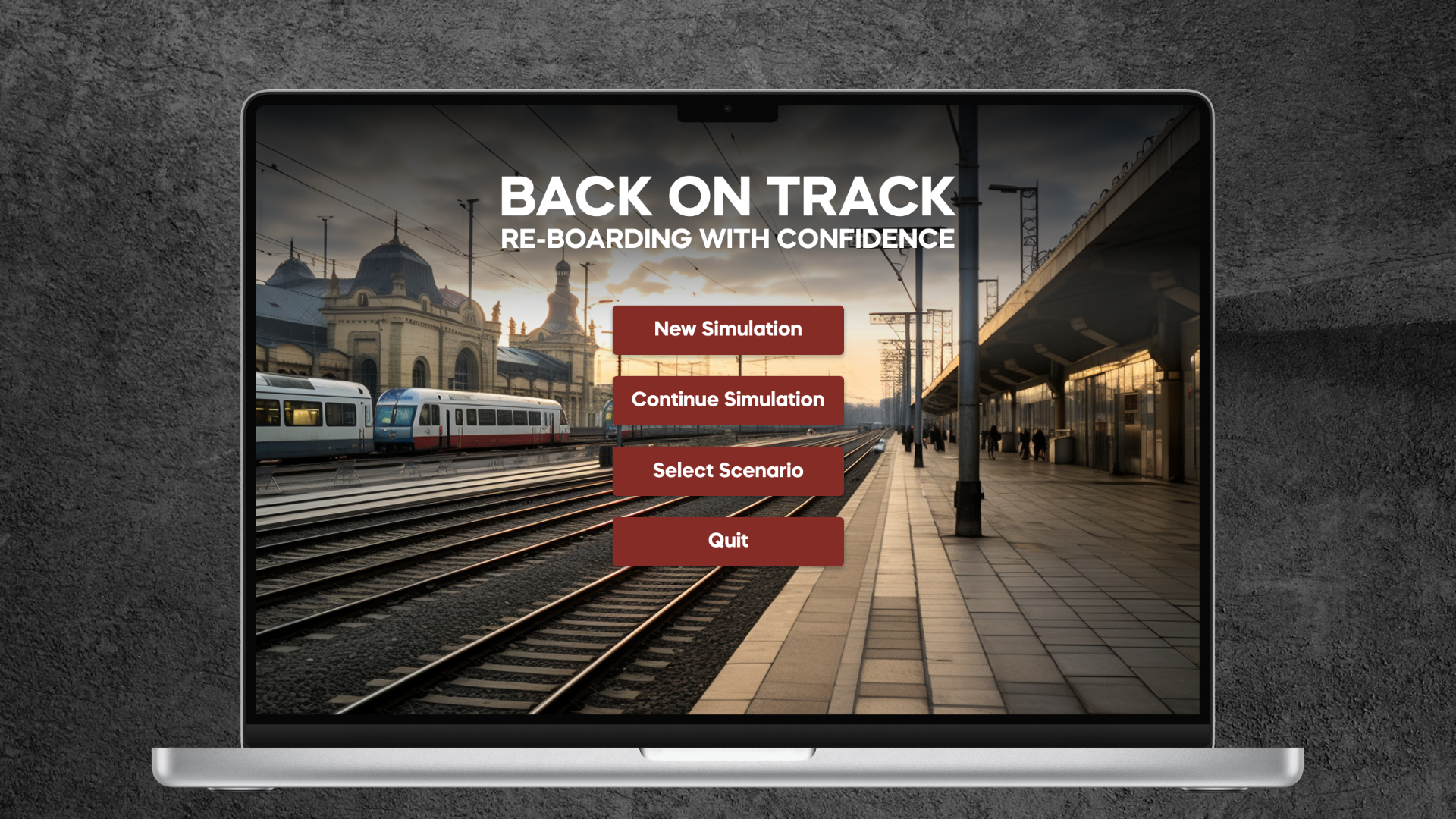
For a course in Virtual Reality during my time in University, NS (National Dutch Railways) came to us with the question: How can we use Virtual Reality (VR) to support NS frontline railway personnel during their daily tasks? With a team of six people, we ended up building a prototype for a VRET system with the goal to help NS employees overcome trauma after impactful incidents and return to work safely.
To truly understand what railway staff face every day, we went out to a train station to interview conductors, drivers, and safety officers about their daily tasks, safety concerns and friction points.
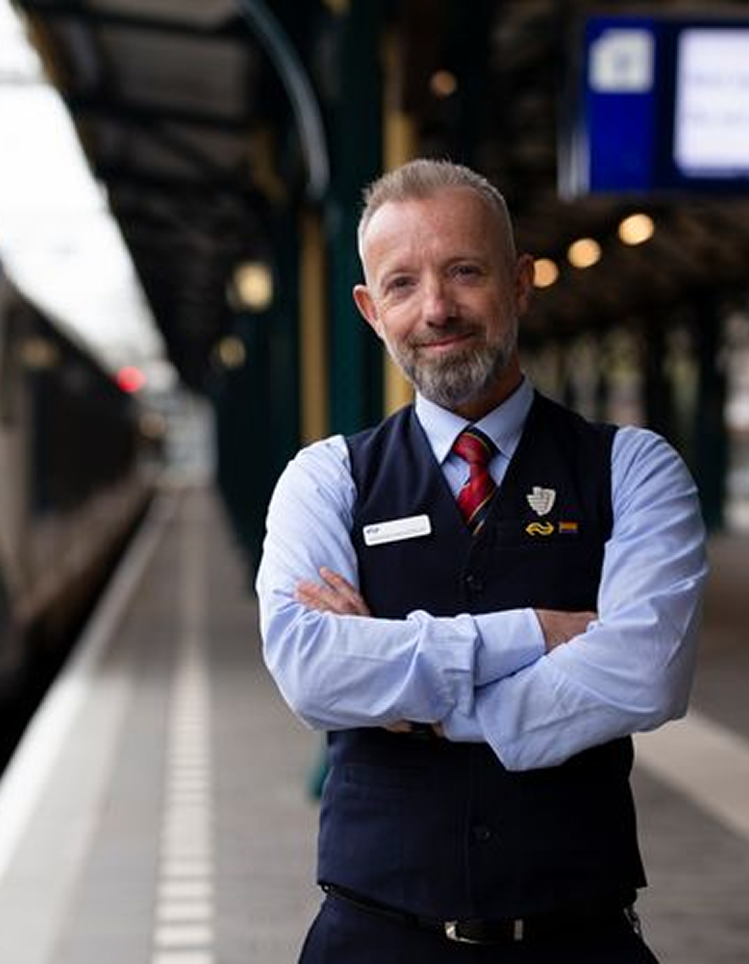
The train driver we spoke to quietly opened up, revealing that critical communication links between the train cabins and regional offices break down constantly due to backend shortage strains.
They walked us through the intense, daily aggression they face: last-minute platform arguments, hostile ticket checks, and the overwhelming anxiety of dealing with passengers who refuse to leave.
These law enforcement teams carry an invisible psychological weight. When a critical track accident or tragedy occurs, they are the first on the line, managing and covering the scene until investigators arrive.
NS asked us "how can VR support train operations?", but the more we listened, the clearer it got that the bottleneck weren’t only about efficiency and trains. It was also about people, and how impossibly hard it is to walk back into the carriage where the worst day of your career happened.
The current situation with sick leave due to a traumatic event is to slowly get back by yourself. However, we found that Virtual Reality Exposure Therapy (VRET) can assist them in this process. VRET has therapeutic benefits by providing highly controlled, immersive rehabilitation scenes. We therefore decided to design and build an empathetic VR system prototype that supports front-line railway staff through trauma recovery.
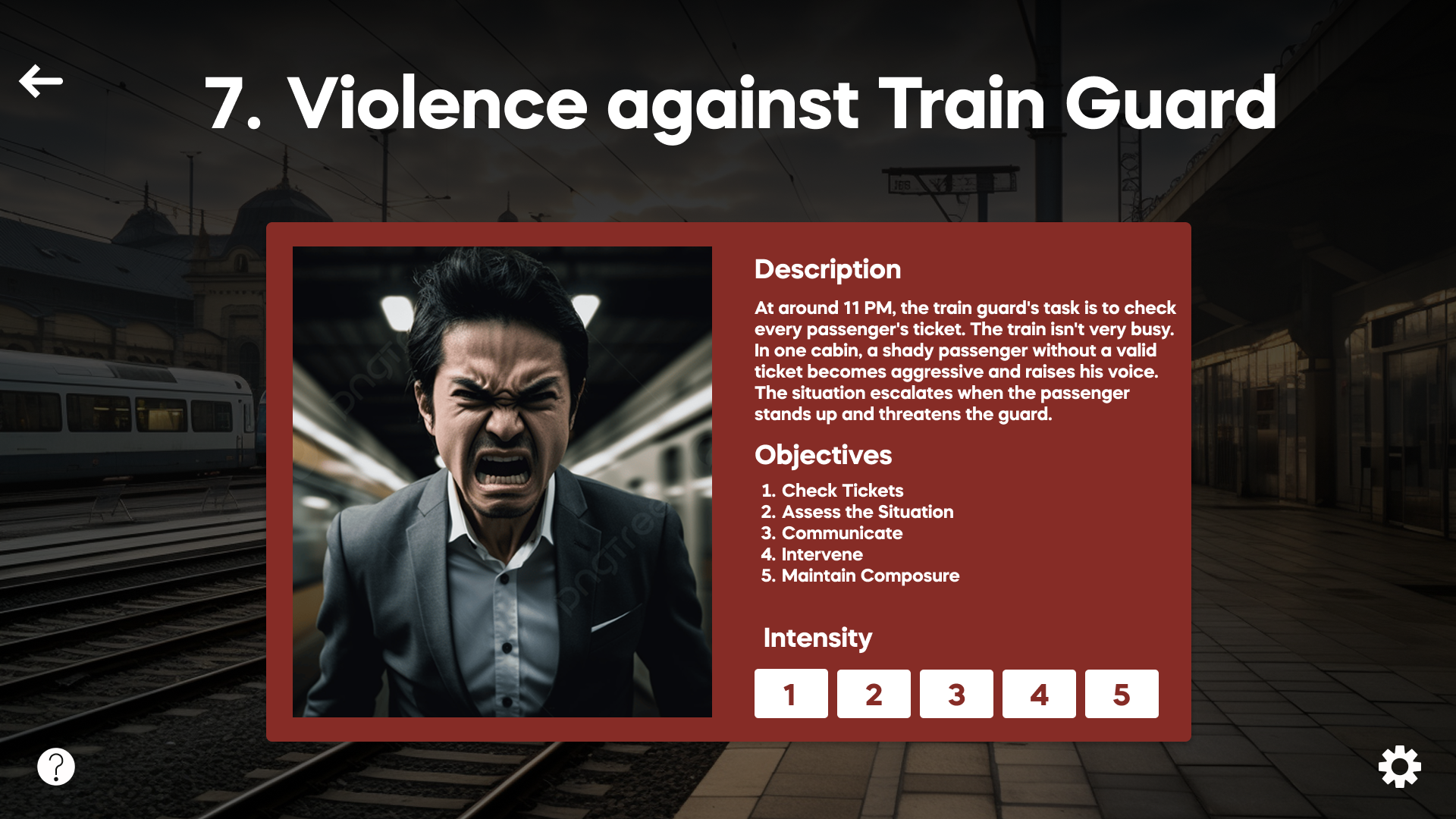
Psychological safety cannot be rushed: it requires gradual progression and total control. To make sure our approach was safe and effective, we collaborated with a psychologist to create a 7-level exposure journey. The logic is simple: the simulation starts in total stillness and slowly introduces external stress. It begins in an empty train carriage, moves into crowded commuter settings, and gradually scales up to active verbal aggression defusal.
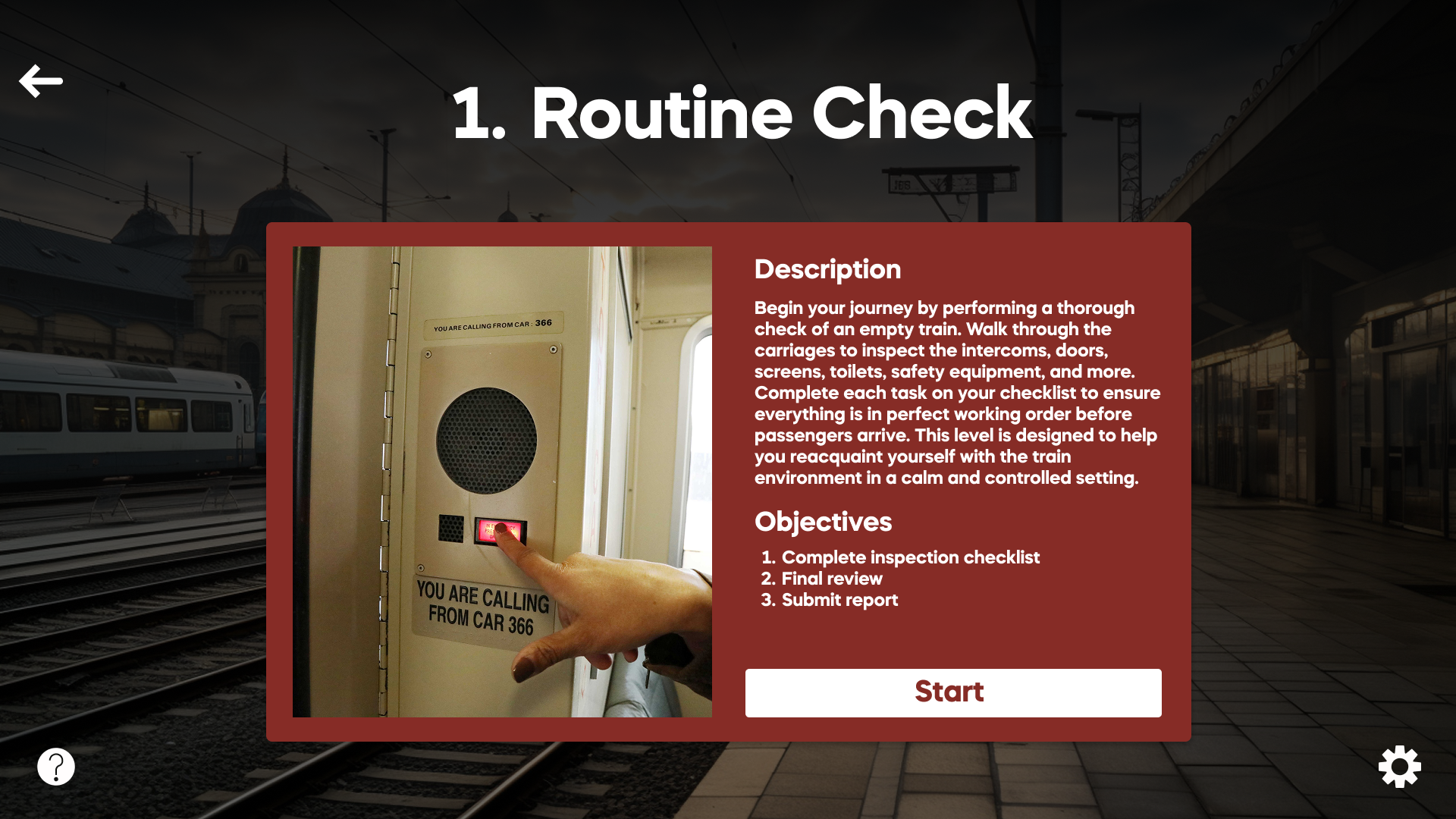
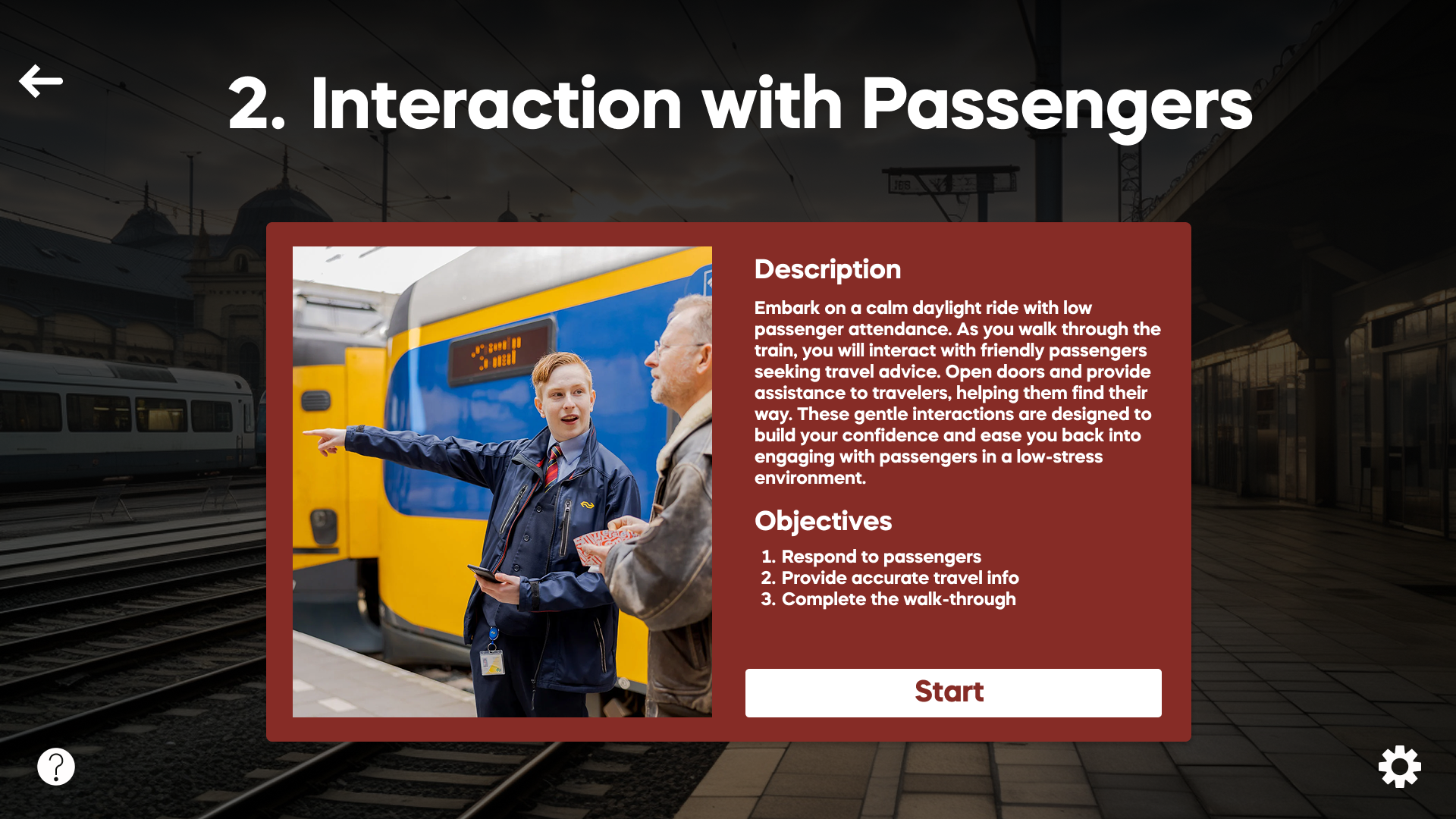
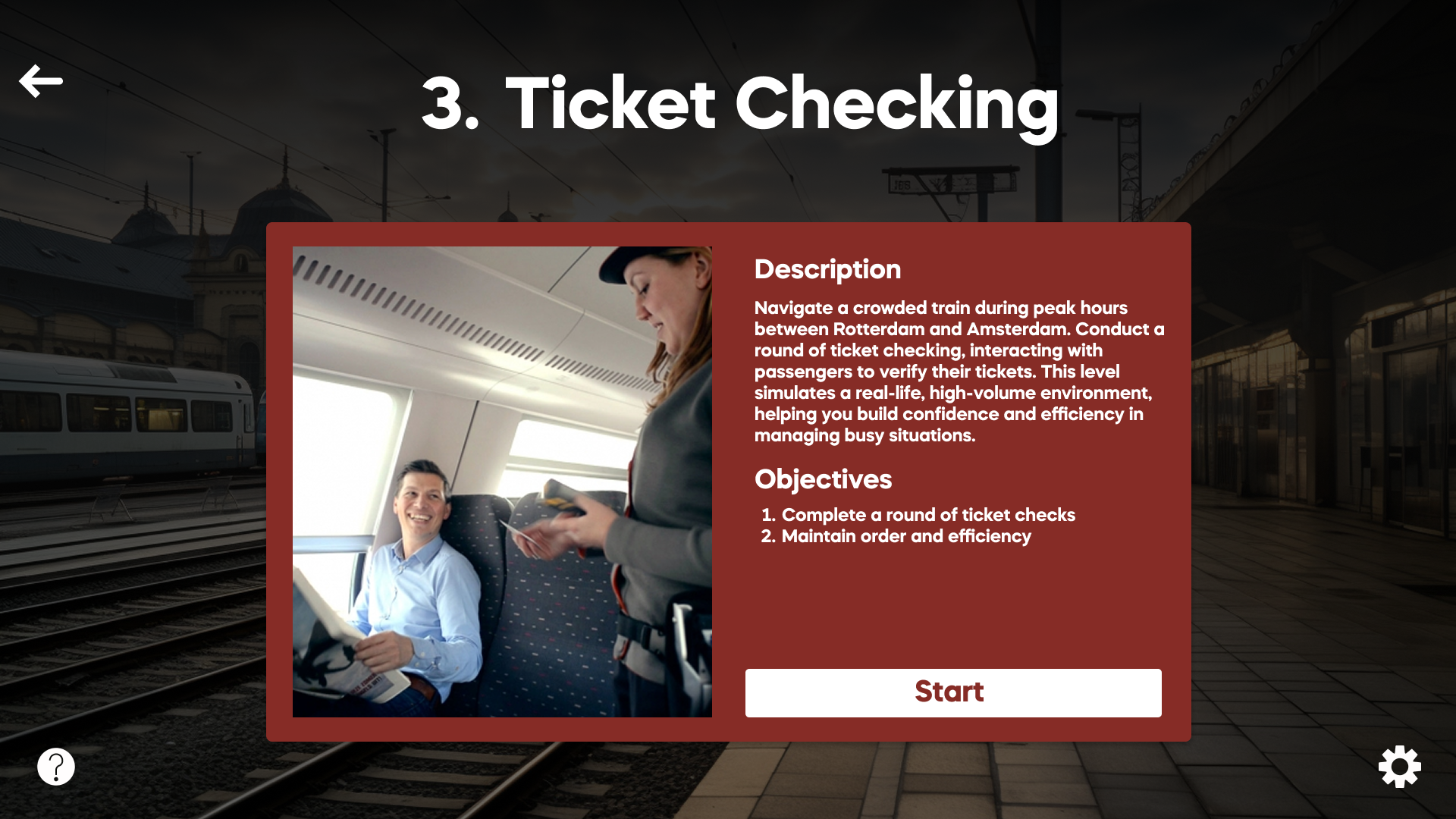
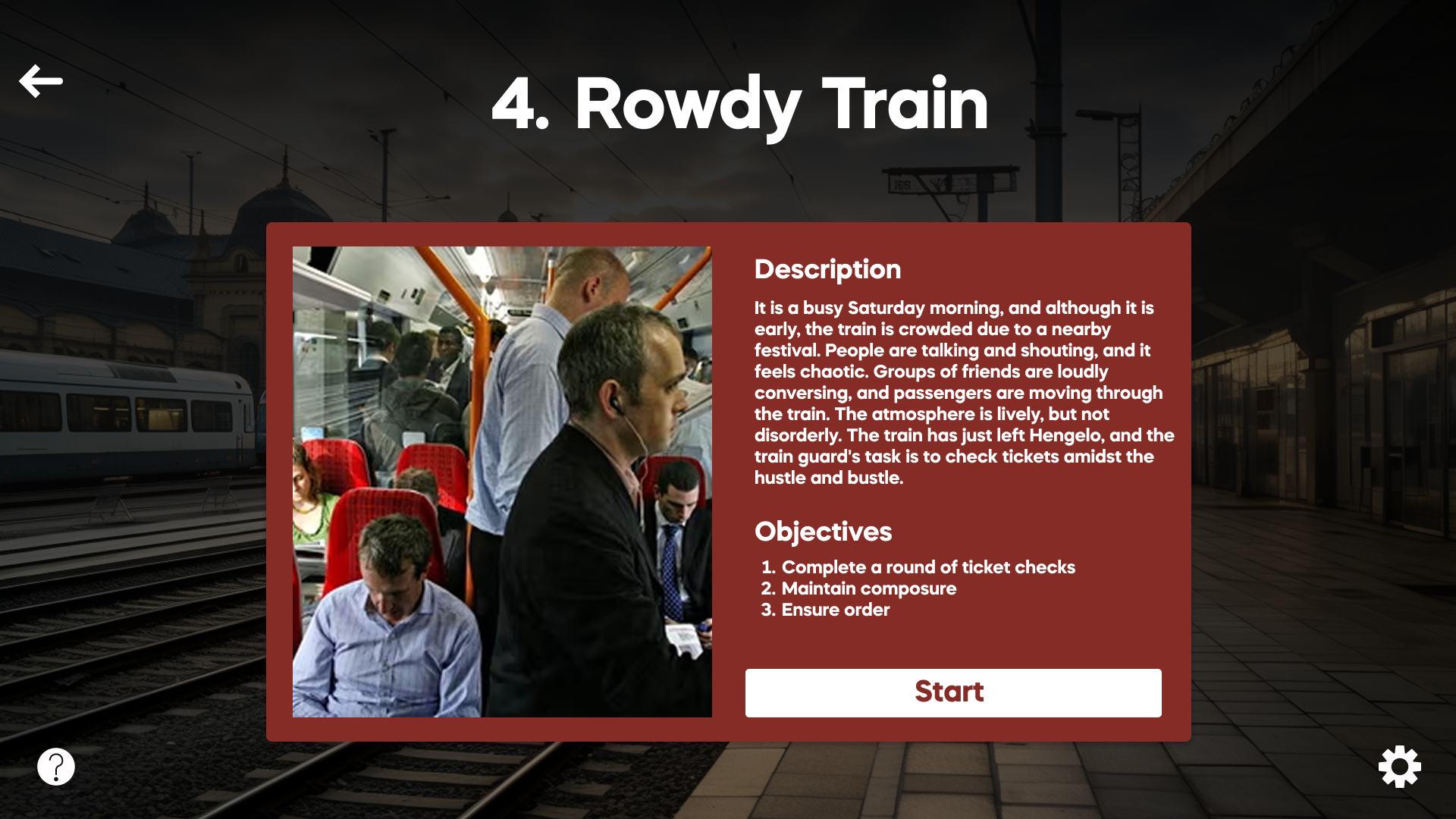
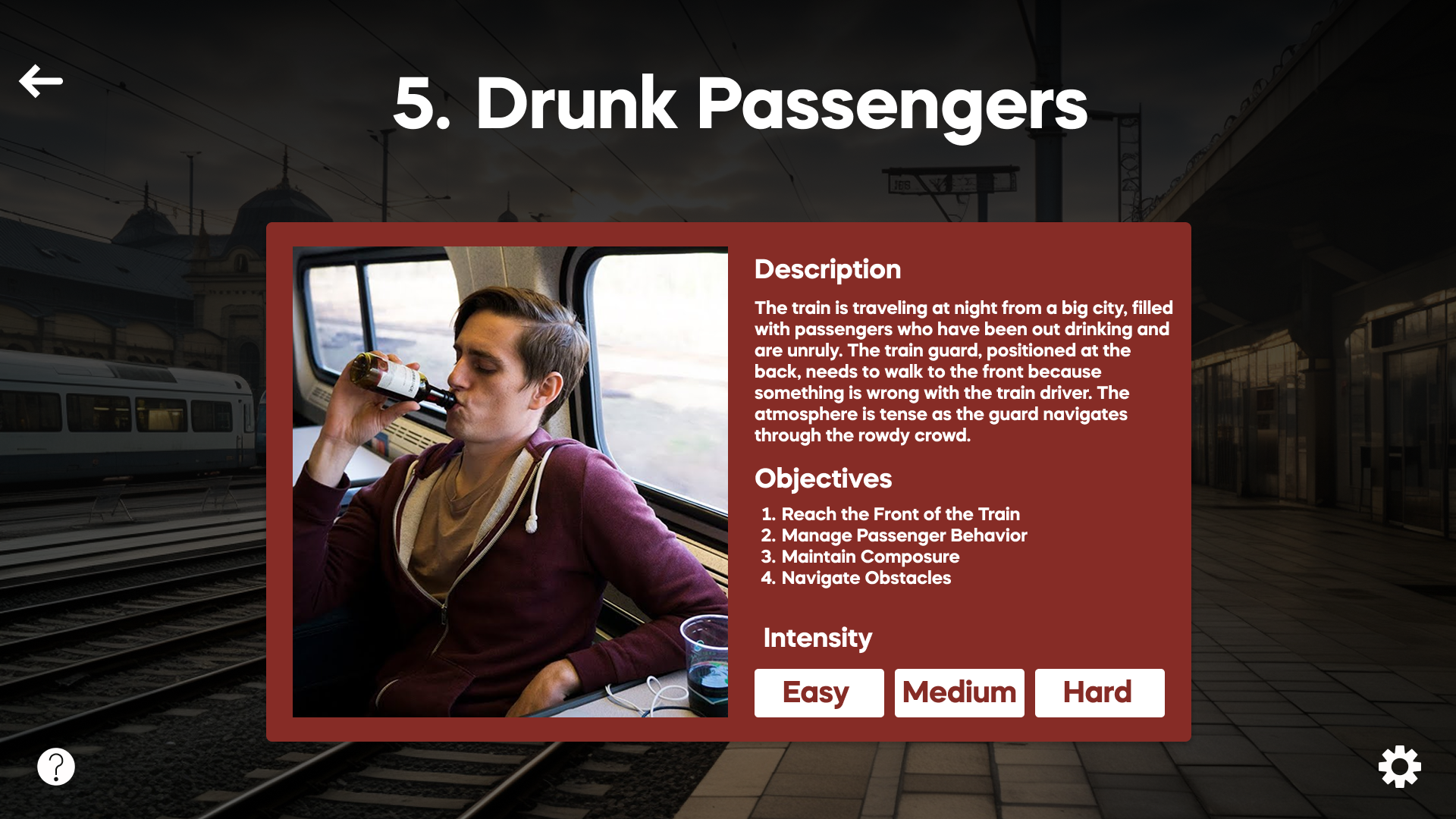
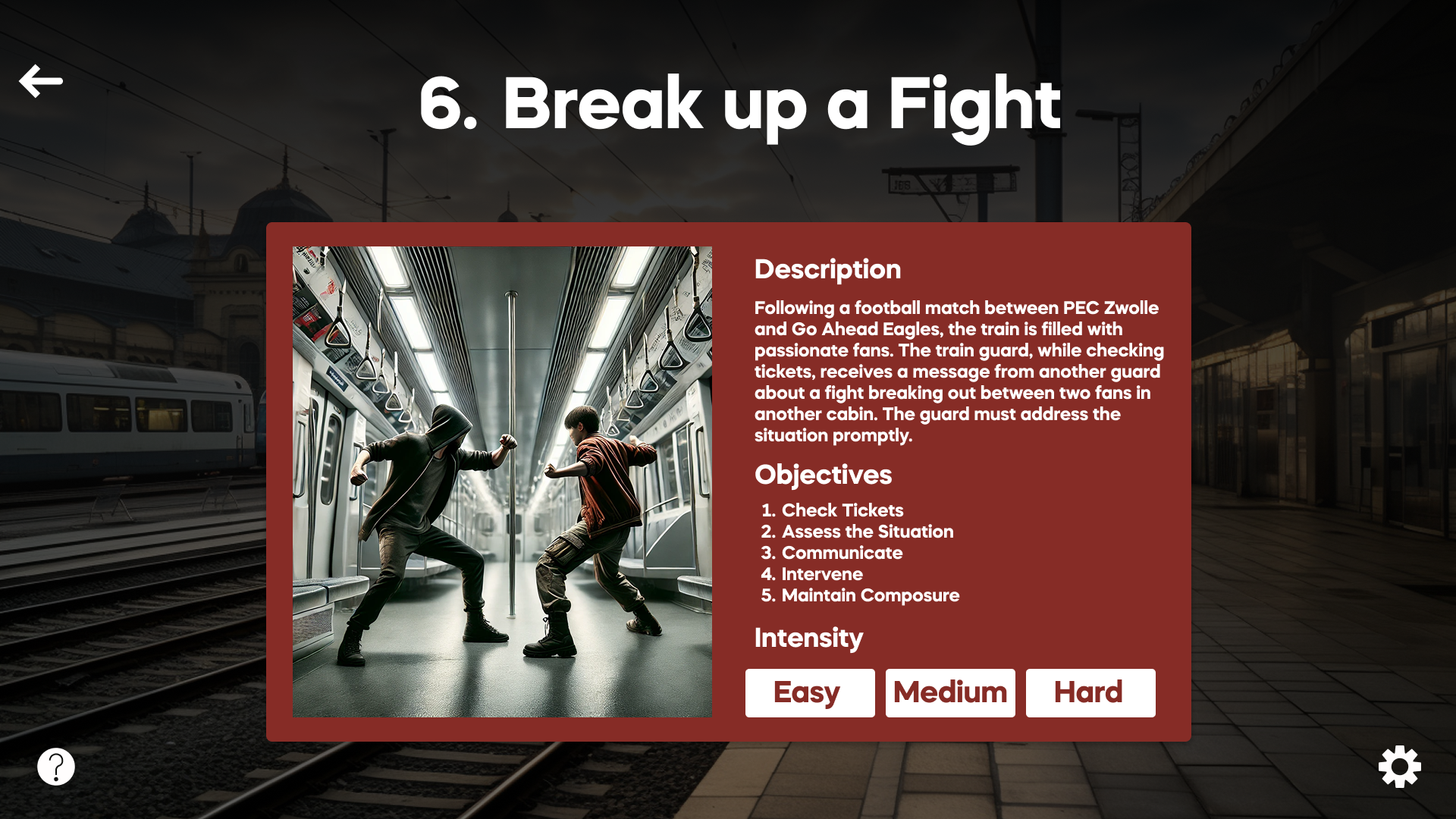
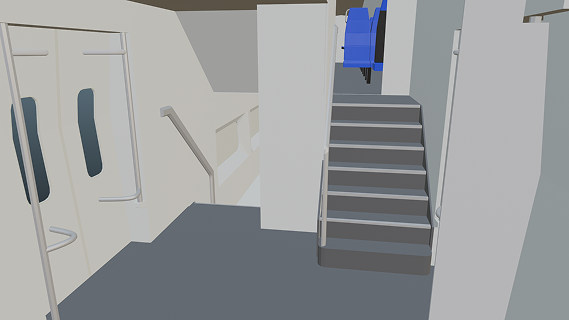
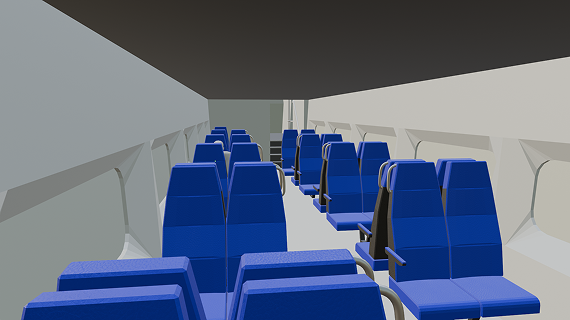
Exposure loops only work if the autonomic nervous system believes the room. Therefore, we've built a standard Intercity NS carriage interior from scratch in Blender, after which I later built the VR levels in Unity.
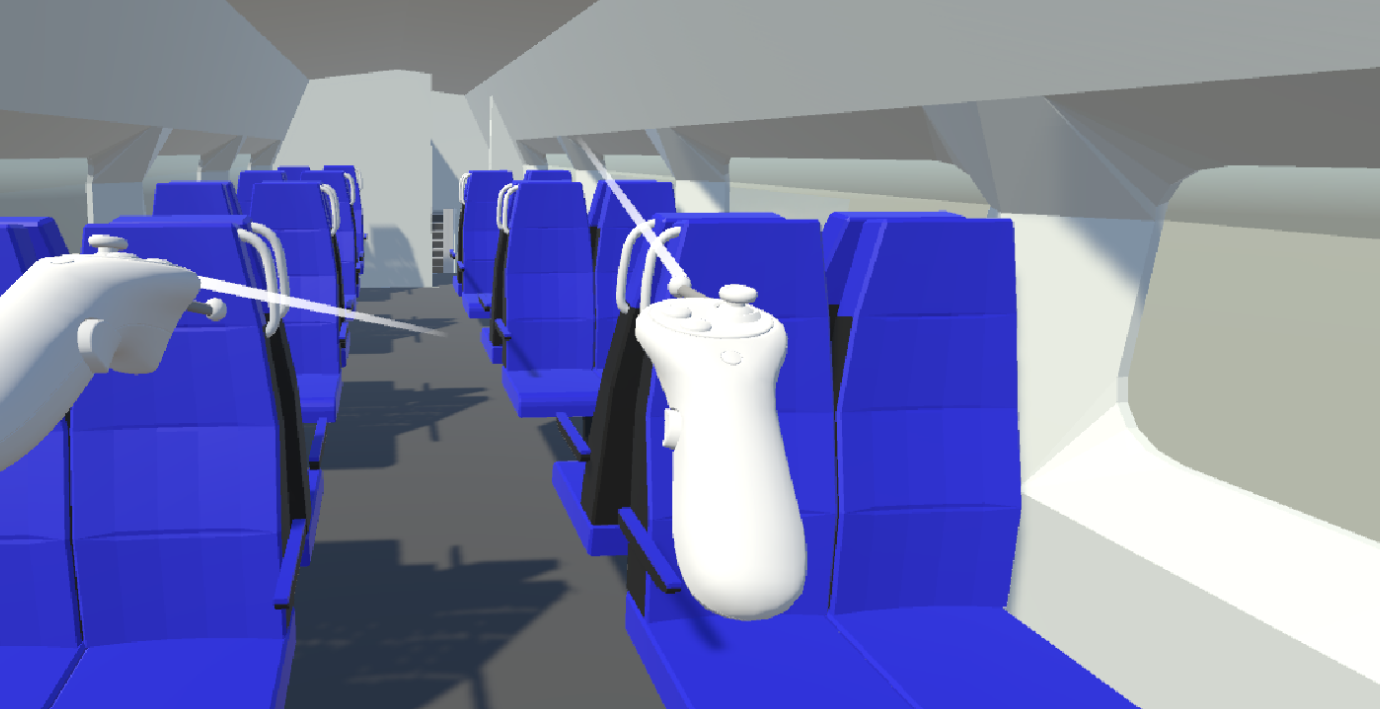
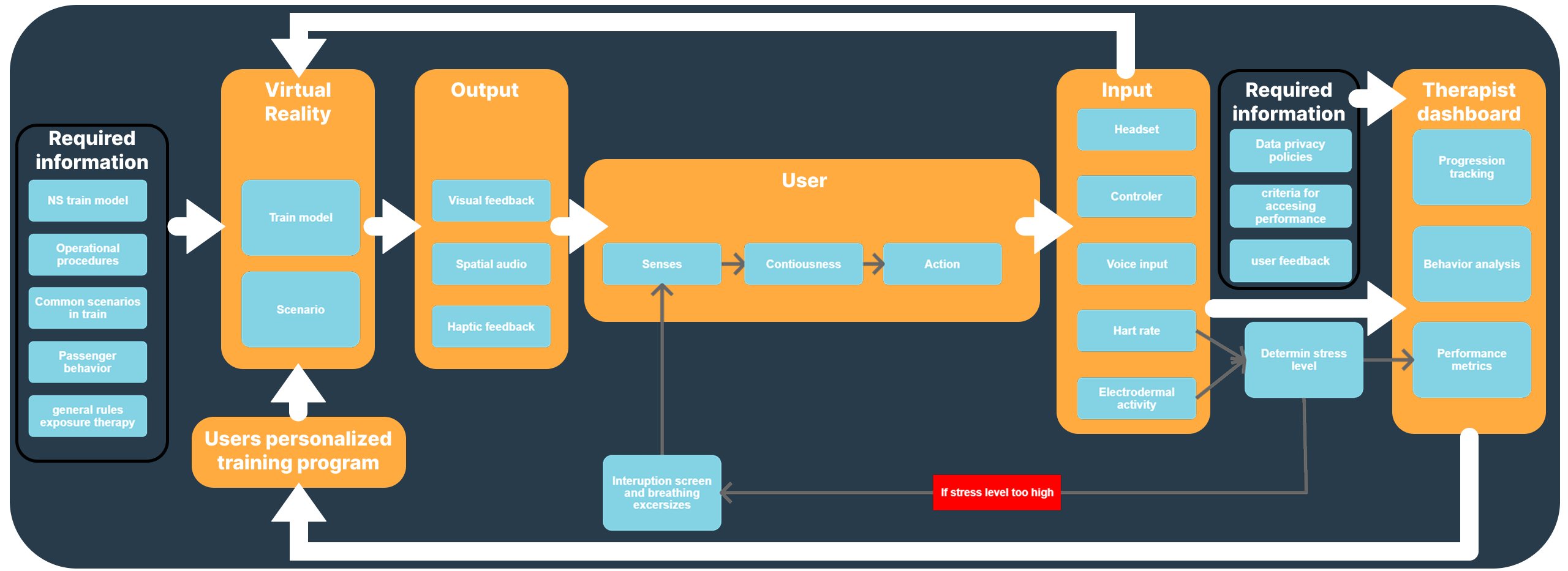
To ensure the user never goes through therapy alone, we designed a dual-perspective system architecture that supports two opposite states of mind simultaneously: a highly stressed employee inside the headset and a calm specialist at the dashboard.
While Levels 1 to 3 allow for independent user autonomy in calm settings, Levels 4 to 7 unlock live dashboard overrides. This allows the attending therapist to manually tweak intensity parameters in real time to match the user's specific trauma triggers.
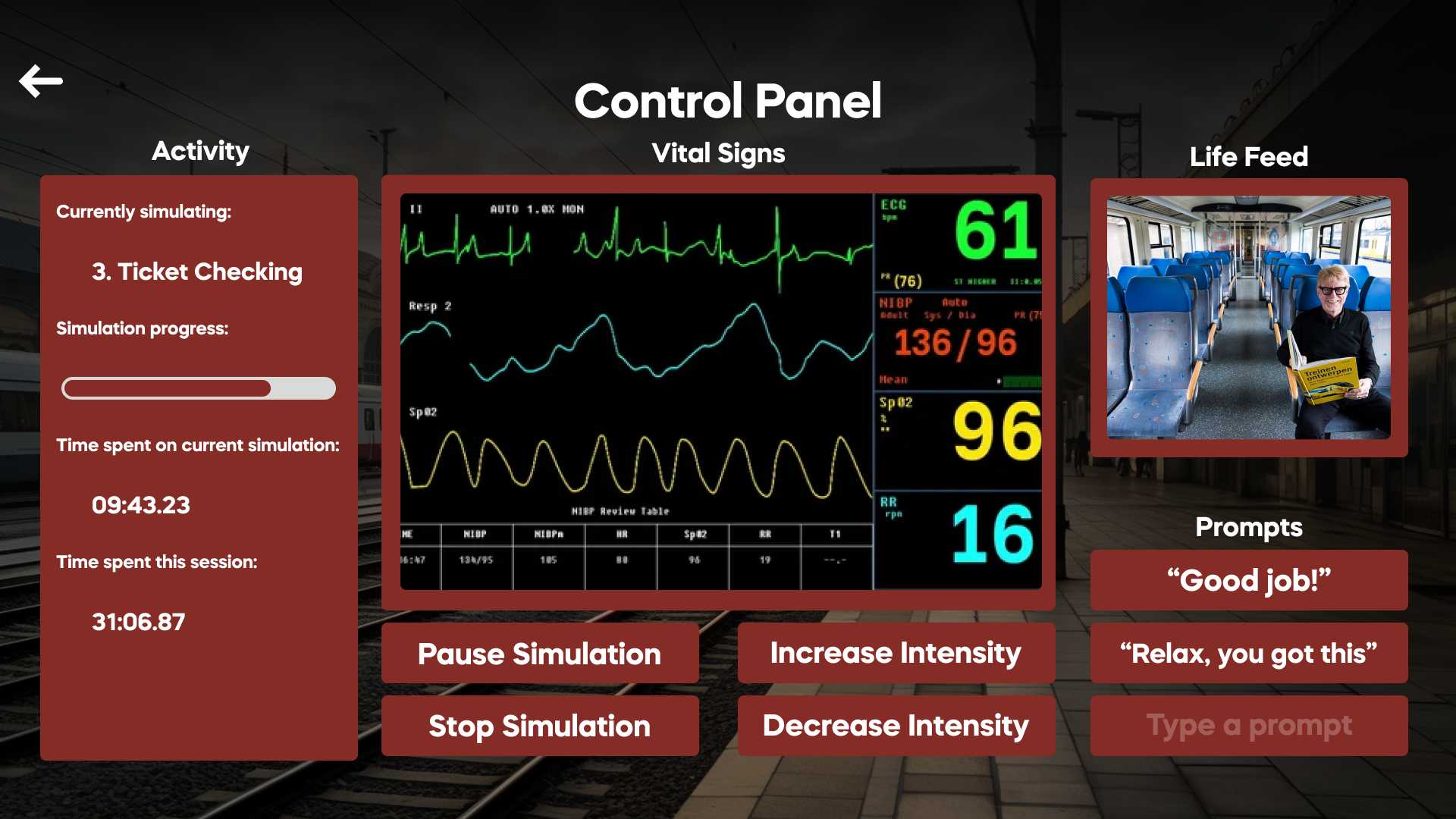
To accommodate these opposite structural needs, the layout splits into two distinct interfaces:
1. The In-Headset Menu: Designed to keep cognitive load as low as possible during moments of high anxiety, we stripped away all text blocks and complex submenus in favor of massive touch targets, ultra-clean spacing, and absolute visual stillness.
2. The Therapist Dashboard: Operating as a clinical mission control, it displays a live stream of the user’s line of sight alongside real-time heart-rate telemetry lines. With a single click, the specialist can lower the situational intensity, pause the simulation, or open a direct audio line to guide the employee through grounding protocols.
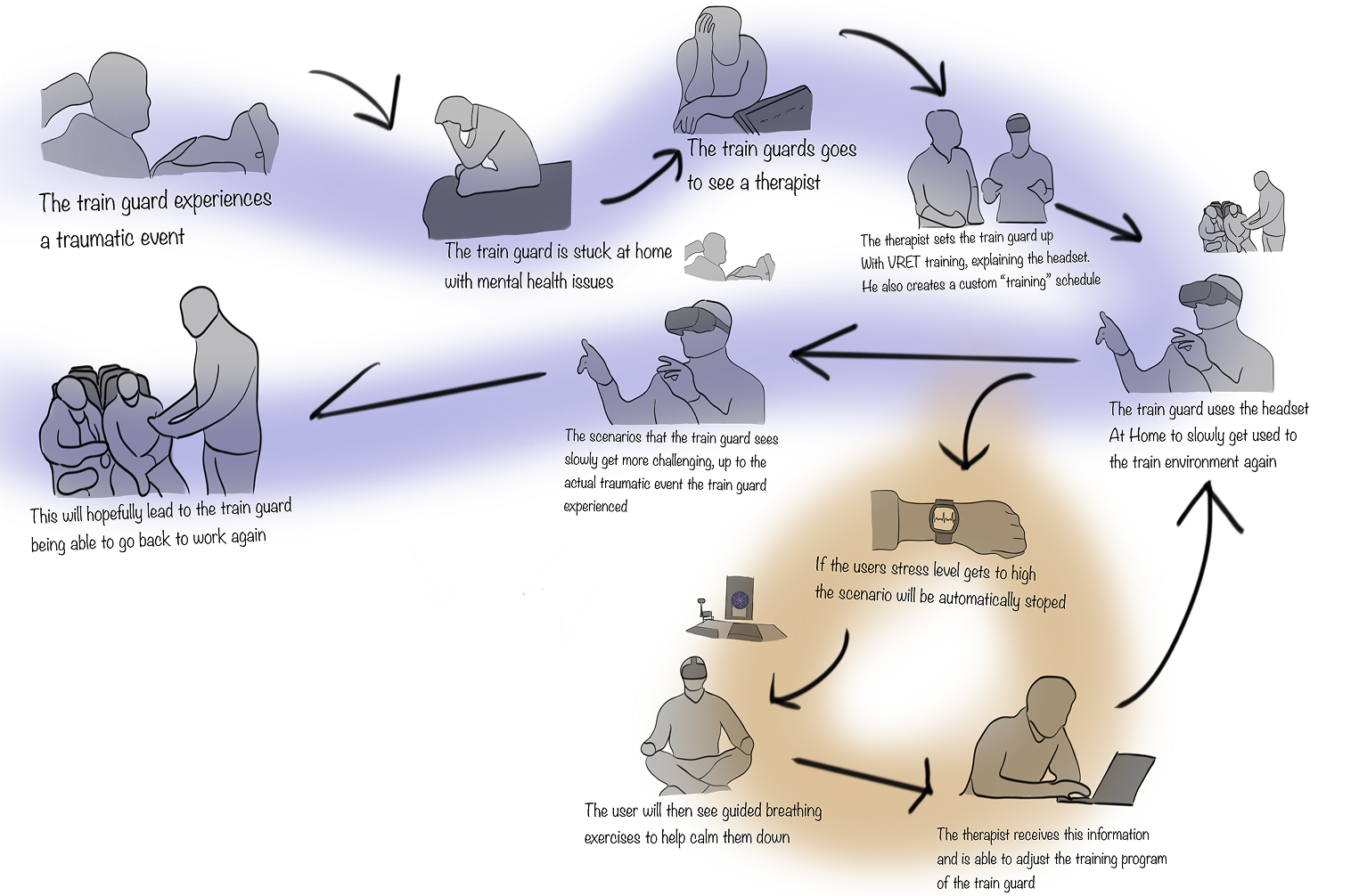
To ensure the interaction of NS staff with our solution is understood by everyone, we mapped out the interactions. This interaction chart illustrates the step-by-step experience from the initial psychological trigger to active recovery inside our VRET solution.
We were invited to demonstrate and validate our functioning system prototype directly at the NS corporate headquarters in Utrecht. We set up a live evaluation bay: our documentation layout on the table, an iPad running the active specialist telemetry panel, and a Meta Quest 3 headset ready for live testing.
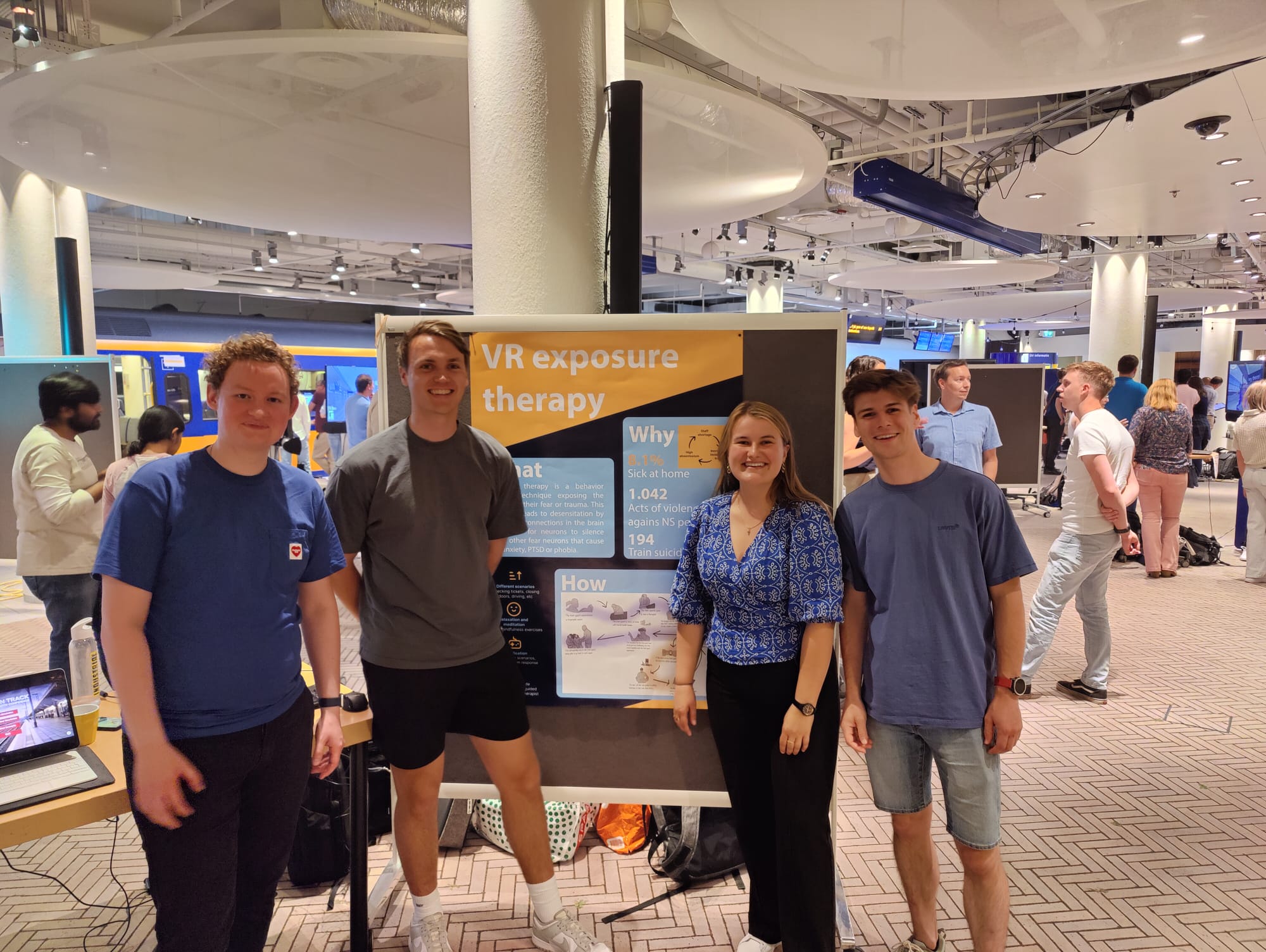
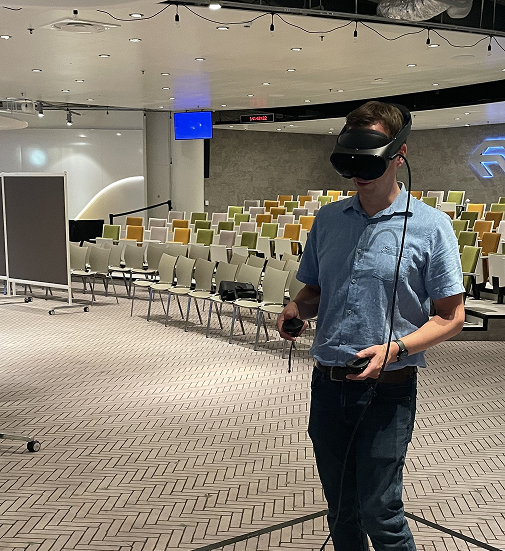
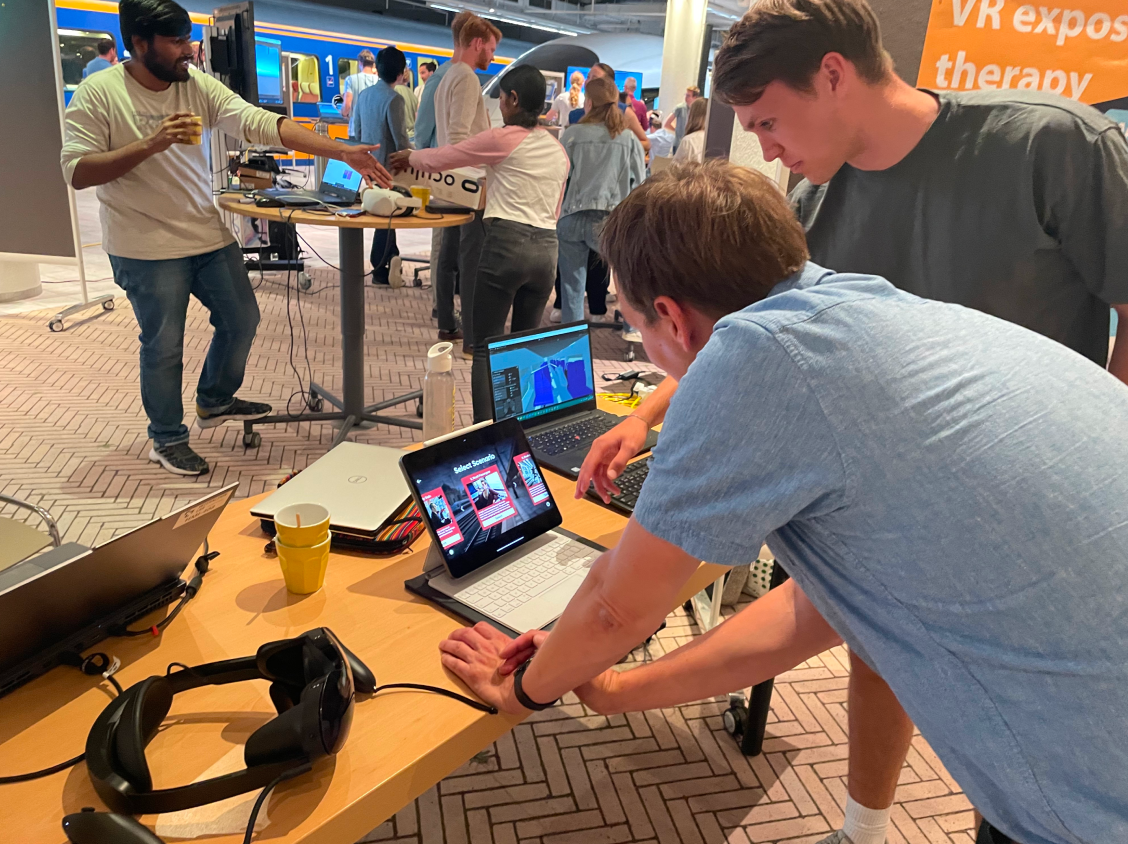
The validation results proved that operators with zero previous spatial computing experience could fully master the interactive controls within minutes, confirming the interface's accessibility. The feedback from former team leaders and company specialists was very positive due to the human angle of the project. They confirmed that this could be a way to help railway staff to get back on track.
Seeing our prototype in action at headquarters highlighted a broader reality about industry innovation. The common temptation is to point spatial computing and VR entirely at logistical efficiency, building things like automated driving algorithms or mechanical diagnostic dashboards to optimize costs. While those projects are necessary, this experience showed me how powerful it is to focus on the human angle. With so much modern technology directed at maximizing efficiency or replacing staff, using advanced frameworks to actively protect and improve the lives of the people running the system is incredibly rewarding. It is the kind of meaningful impact I look forward to bringing to future design spaces.